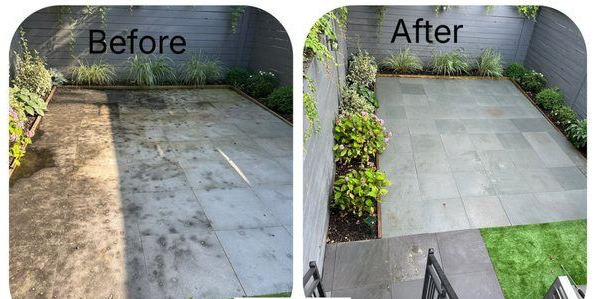
White vinegar is the starting point for light to moderate deposits. It's diluted acetic acid, safe for pavers in reasonable concentrations, and genuinely effective on fresh or moderate buildup. Apply it undiluted to the stained area, let it dwell for 10 to 15 minutes — you may see it fizzing slightly, which is the acid reacting with the calcium — and scrub with a stiff nylon brush before rinsing. For moderate staining, a second application often produces noticeably better results than a single treatment. The limitation of vinegar is that it's relatively weak, and on heavy, layered deposits that have been building for years, it may not be strong enough to fully dissolve what's there.
For more significant buildup, a purpose-made efflorescence and mineral deposit remover is the right tool. These are available at tile and masonry supply stores and from pool supply retailers, and they contain stronger acids — typically phosphoric or sulfamic acid — in concentrations calibrated for masonry surfaces. They work considerably faster and more thoroughly than vinegar on serious deposits. The application process is the same: wet the pavers first (applying acid to dry pavers can cause uneven reaction and potential surface damage), apply the cleaner, let it dwell, scrub, and rinse thoroughly. Read the product instructions for dilution — some concentrations need to be cut with water, others are used full strength.
Muriatic acid is the nuclear option and genuinely one to approach carefully. It's what professional concrete cleaners use for severe mineral deposits, and it works extremely well — too well if you're not careful. Muriatic acid can etch paver surfaces, strip sealers, and damage surrounding plants and metal if it runs off carelessly. If you go this route, dilute it significantly (typically 1 part acid to 10 parts water, always adding acid to water, never the reverse), work in a small test area first, rinse aggressively after treatment, and neutralize the surface with a baking soda and water solution before the final rinse. Proper eye protection, gloves, and ventilation aren't optional here.
After you've successfully removed hard water stains from concrete pavers in your dry climate, sealing the pavers is the most practical way to make future cleaning easier. A quality penetrating sealer fills the pores in the concrete and creates a surface that mineral deposits can't bond to as aggressively. Stains that form on sealed pavers typically respond to vinegar or light cleaner rather than requiring the stronger interventions. Most sealers need to be reapplied every two to four years depending on traffic and UV exposure — more frequently in the intense sun of a dry climate, which degrades sealers faster than milder conditions do.